Precious stones carry enormous value, both financially and emotionally. In a market where synthetic stones, treated gems, and outright imitations exist alongside genuine natural ones, the ability to accurately identify and analyze gemstones is not a luxury. It is a necessity.
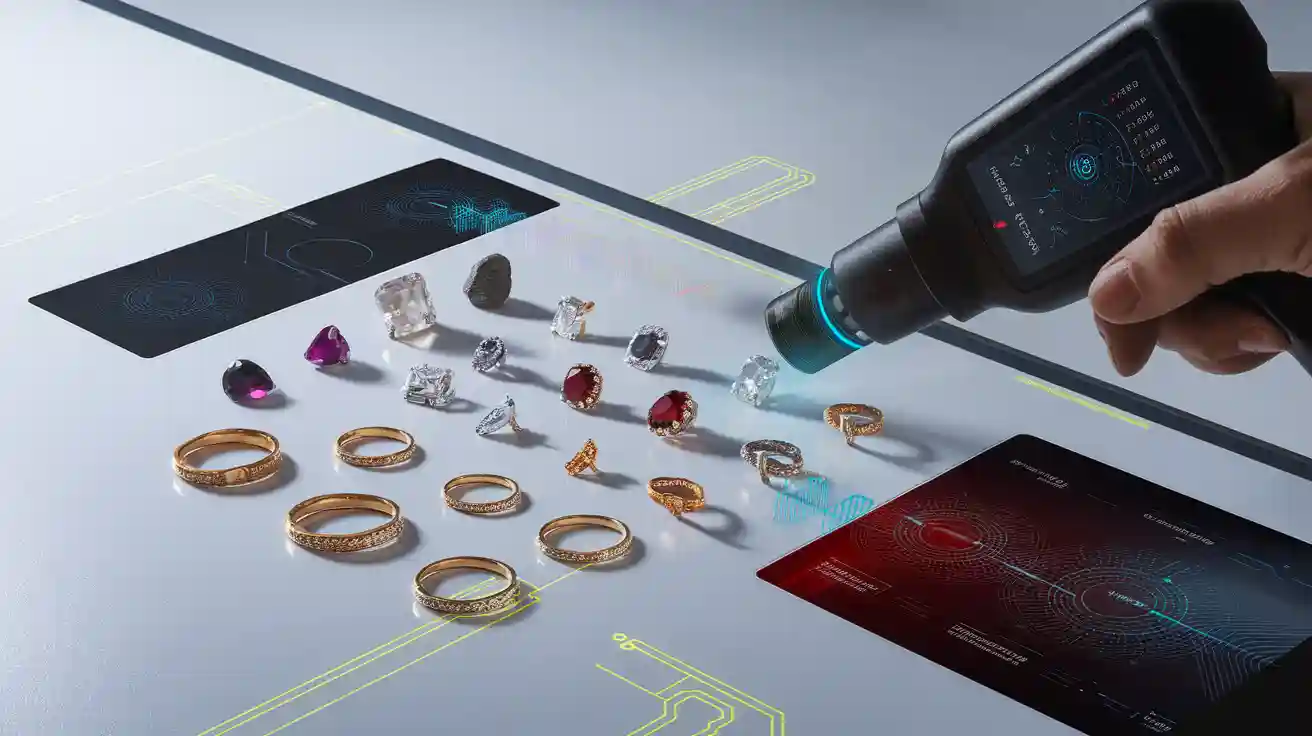
The benchtop XRF gemstone analyzer is used by gemologists, jewelers, traders, customs authorities, and research laboratories around the world. This instrument provides fast, non-destructive elemental analysis of gemstones without damaging them in any way.
This blog will cover everything you need to know about the XRF gemstone analyzer, how it works, what it can tell you, and why it has become such a trusted instrument in the world of gemology.
What is an XRF Analyzer?
XRF stands for X-Ray Fluorescence. An XRF analyzer is an instrument that uses X-ray energy to identify the elemental composition of a material. When X-rays from the instrument hit a sample, they cause the atoms in that sample to emit secondary X-rays, which are characteristic of each element present. By measuring these emitted X-rays, the instrument can tell you exactly which elements are in the sample and in what concentrations.
This principle works for metals, alloys, soils, coatings, and, most importantly, for our discussion, gemstones. The XRF analyzer for gemstones uses this same technology to identify the trace elements that define a stone’s origin, composition, and authenticity.
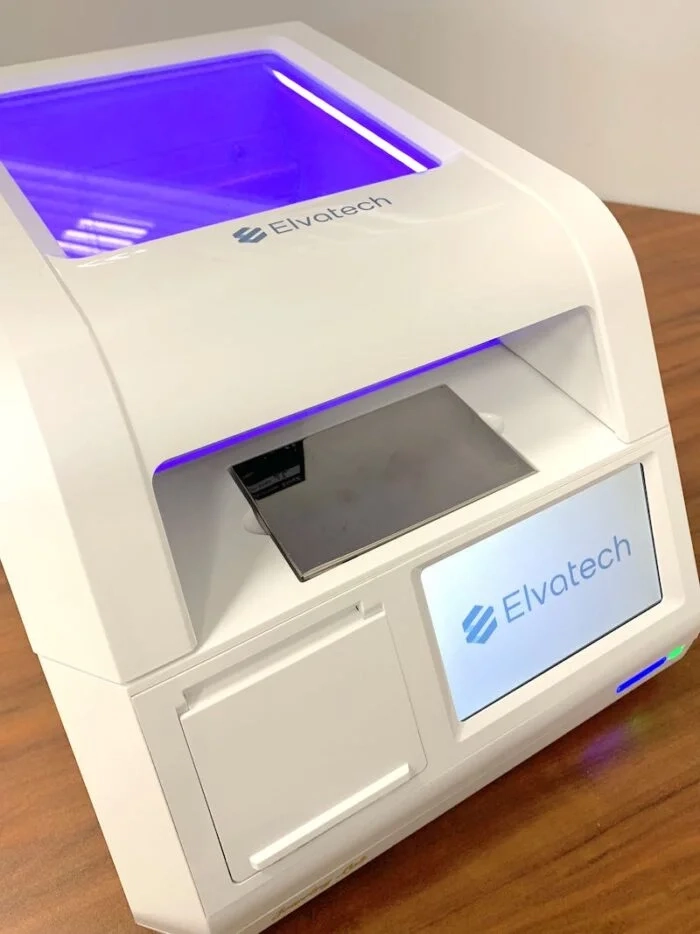
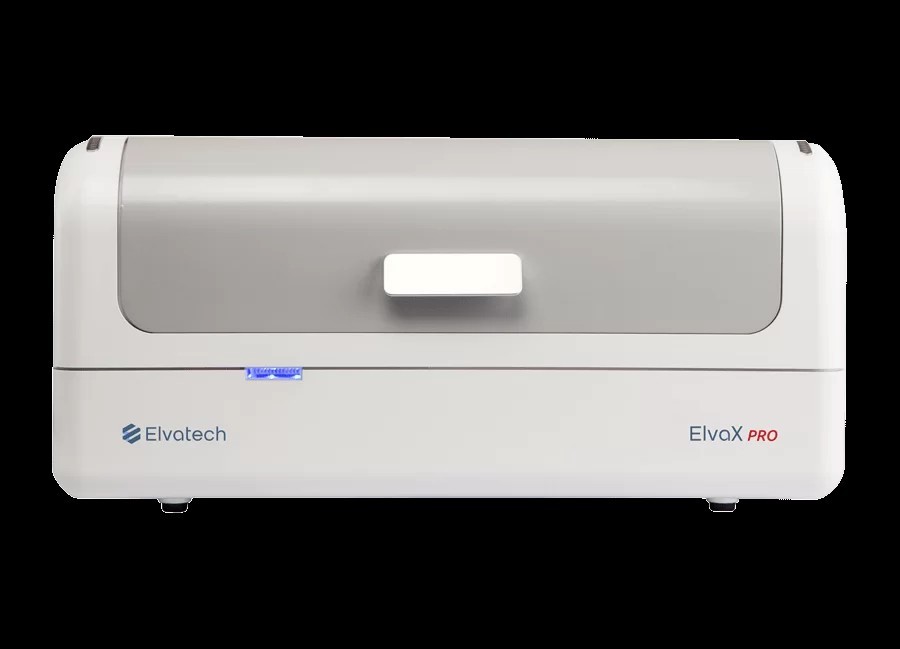
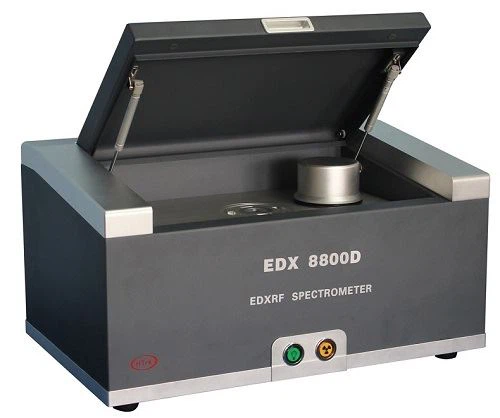
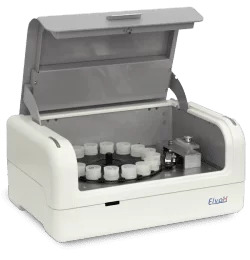
There are portable and benchtop versions of XRF analyzers. For gemstone analysis, the benchtop XRF analyzer is generally preferred because it offers greater precision, a more stable measurement environment, and the ability to analyze small, delicate stones with consistent accuracy. The stone is placed inside the instrument’s chamber, shielded from radiation, and measured under controlled conditions. This is far superior to handheld scanning, especially when you are dealing with high-value gems.
How to Test Gemstone Authenticity Using XRF Technology
One of the most common questions among jewelers and gem traders is how to test gemstone authenticity in a way that is both reliable and non-destructive. Traditional methods like visual inspection, refractive index measurement, and specific gravity testing all have limitations. They can be subjective, require skill, and sometimes still leave room for doubt.
The XRF gemstone analyzer removes most of that uncertainty. Here is how the process works in practice.
When a gemstone is placed inside the benchtop XRF analyzer, the instrument fires X-rays at the stone. The atoms within the stone absorb this energy and then emit characteristic fluorescent X-rays. A detector inside the instrument captures these emissions, and the analysis software interprets them to produce an elemental profile of the stone.
Different gemstones have distinct elemental signatures. For example, rubies and sapphires are both varieties of corundum, which is aluminum oxide. However, their trace element profiles differ. Rubies contain chromium, which gives them their red color, while blue sapphires contain iron and titanium. By identifying these trace elements precisely, the XRF analyzer laboratories and gemologists can confirm not just the stone type but also its geographic origin, since stones from different mining regions carry distinct trace element patterns.
Treatments are another major area where XRF analysis proves invaluable. Many gemstones are heat-treated, fracture-filled, or coated to improve their appearance. Some of these treatments leave detectable elemental traces. For example, lead-glass filling in rubies introduces measurable lead content that would not be present in an untreated stone. An XRF gemstone analyzer can detect this immediately.
Why Gemstone Analysis Needs More Than Visual Inspection
Elemental analysis of gemstones is fundamentally different from visual or optical analysis. When a gemologist looks at a stone through a loupe or microscope, they are observing surface features, inclusions, and optical behavior. This requires years of experience and still carries a margin of subjectivity.
Elemental analysis, by contrast, examines the actual atomic composition of the stone. This information is objective, measurable, and repeatable. Two different operators running the same stone through the same benchtop XRF analyzer facility will get the same result.
This consistency is critical in several real-world scenarios. When a buyer is considering purchasing a high-value gemstone, elemental analysis provides documented proof of what the stone actually is. When a customs officer is inspecting a shipment of gems, XRF analysis can quickly identify discrepancies between declared and actual stone types. When a gem laboratory is issuing a certificate of authenticity, XRF data provides a solid analytical foundation.
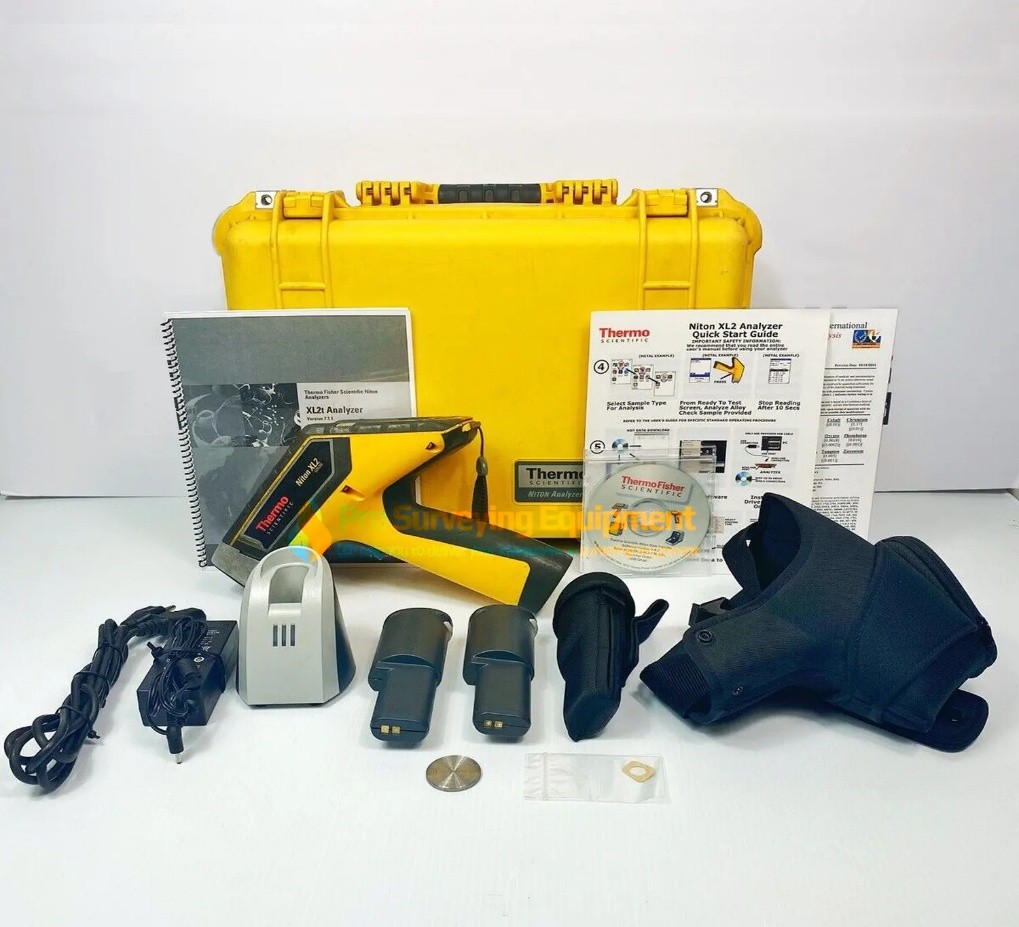
The importance of XRF analyzer in gemstone identification becomes especially clear when you consider how sophisticated modern synthetic gemstones have become. Laboratory-grown rubies, sapphires, emeralds, and diamonds are visually indistinguishable from their natural counterparts to the naked eye. Their optical properties are nearly identical. But their elemental profiles are different, and an XRF gemstone analyzer can pick up those differences.
How XRF Helps in Gemstone Identification
Gemstone identification techniques have evolved considerably over the decades. Traditional methods include visual observation, refractive index measurement using a refractometer, specific gravity testing, spectroscopic analysis, and microscopic examination of inclusions. Each of these methods has its place, and experienced gemologists use them in combination.
XRF analysis has added a powerful new dimension to this toolkit. It does not replace other methods, but it significantly strengthens the overall identification process. When combined with spectroscopic techniques like Raman spectroscopy or FTIR analysis, XRF elemental data provides a comprehensive picture that is difficult to challenge.
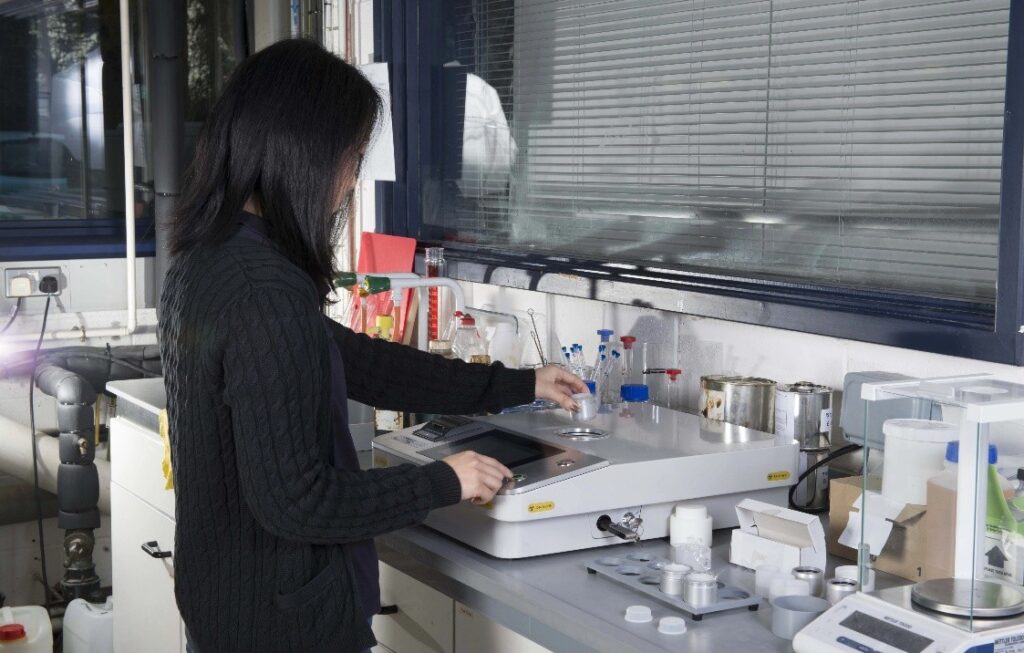
In recent years, many professional gem laboratories and leading jewelers have incorporated benchtop XRF analyzers into their standard testing protocols. The benchtop XRF analyzer market has grown accordingly as more businesses recognize the value of having this capability in-house rather than sending stones to external laboratories for every analysis.
Why the Benchtop Format is Ideal for Gemstone Analysis
Among the different types of XRF analyzers available, the benchtop format is particularly well-suited for gemstone work. Here is why.
Gemstones are small, often irregularly shaped, and extremely valuable. Analyzing them requires a stable, controlled environment where the measurement geometry is consistent and the risk of damage is zero. In a benchtop XRF analyzer, the sample is placed inside a protective chamber on a stable stage. The X-ray beam is precisely directed at the stone, and the measurement is taken under conditions that deliver maximum analytical accuracy.
The benchtop design also allows for better detector performance compared to handheld units. More sophisticated detectors capture a wider range of elemental emissions, allowing the instrument to detect trace elements at very low concentrations. This level of sensitivity is important in gemology because the differences between a natural and synthetic stone, or between a treated and untreated stone, can lie in trace elements present at concentrations of just a few parts per million.
Another practical advantage is that benchtop systems can be configured with optical positioning cameras, allowing the operator to see exactly where the X-ray beam will hit the stone. For gems with interesting inclusions or zoned compositions, this targeted measurement capability is highly valuable.
The Growing Importance of XRF Analysis in the Gem Market
The Gold and Commodities Exchange, the historic Gold Souk, and a thriving export industry make gemstone authentication a matter of constant practical importance. With high transaction volumes and significant financial stakes involved in each deal, the demand for fast and reliable gemstone testing has never been higher.
This is why the market for XRF analyzer solutions has expanded significantly in recent years. Gem traders, jewelers, customs and border protection services, auction houses, and insurance assessors are increasingly turning to benchtop XRF analyzers as their primary identification tool.
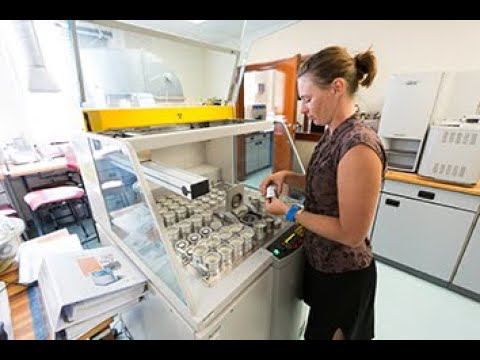
The ability to deliver results in minutes, without destroying or even marking the stone in any way, makes the best XRF analyzer for gemstones a highly cost-effective investment. Consider the alternative: sending each stone to an external laboratory takes days or weeks, costs money per test, and creates logistical complications. With an in-house benchtop XRF analyzer, you can test dozens of stones per day and build a growing database of elemental profiles that supports your business operations over time.
What the Best XRF Analyzer for Gemstones Should Be Able to Do
If you are looking to buy XRF gemstone analyzer equipment for professional use, it is worth understanding what separates a capable instrument from an average one.
Detection range is critical. A good gemstone XRF analyzer should be able to detect elements from sodium to uranium across the periodic table, covering all the trace elements that matter in gem identification. Sensitivity matters enormously, as does the instrument’s ability to deliver consistent results across repeated measurements of the same stone.
The software platform is equally important. Modern XRF analysis software for gemstones should be able to store measurement results, generate comparison reports, flag unusual elemental profiles, and maintain a searchable database of analyzed stones. Integration with gemological reference databases adds another layer of analytical power.
Sample chamber design is another consideration. The chamber should accommodate a range of stone sizes and shapes, from small faceted gems to rough crystals, without requiring special mounting equipment for every sample.
Radiation safety is non-negotiable. A properly engineered benchtop XRF analyzer has radiation shielding built into the sample chamber, ensuring that the operator is fully protected during measurement. Reputable manufacturers design their instruments to comply with applicable radiation safety standards in the regions where they are sold.
How to Buy XRF Analyzer in the KSA
If you are ready to buy XRF analyzer in the KSA for your gemstone business or laboratory, working with an experienced and knowledgeable supplier makes a significant difference. The right supplier will help you select the instrument that matches your specific application, provide installation and commissioning support, train your staff, and offer ongoing calibration and service assistance.
Apex Instrument is a trusted name for analytical instrumentation. We supply a range of benchtop XRF analyzers suited to gemstone analysis, precious metal testing, and other elemental analysis applications. Our team understands the specific requirements of the gem industry, and we provide practical guidance to ensure that every client gets an instrument that delivers the results they need.
FAQs
1. What is an XRF gemstone analyzer, and how is it used?
An XRF gemstone analyzer is a scientific instrument that uses X-ray fluorescence technology to identify the elemental composition of gemstones. It is used by gemologists, jewelers, traders, and laboratories to determine the identity, origin, and treatment status of precious stones without causing any damage. The stone is simply placed inside the instrument, and within minutes, a complete elemental profile is generated.
2. What does XRF stand for?
XRF stands for X-Ray Fluorescence. It refers to the process by which atoms in a sample emit characteristic X-rays when exposed to primary X-ray energy. These emitted X-rays are measured by the instrument to identify which elements are present and in what quantities.
3. How does a benchtop XRF analyzer differ from a handheld XRF analyzer?
A benchtop XRF analyzer offers greater precision, a more controlled measurement environment, and higher sensitivity than handheld units. For gemstone analysis, benchtop instruments are preferred because they deliver more accurate elemental data, especially for trace element detection at very low concentrations. The stone is analyzed inside a shielded chamber under stable conditions.
4. Can an XRF analyzer distinguish between natural and synthetic gemstones?
Yes, the importance of XRF analyzer in gemstone identification is particularly evident when distinguishing natural from synthetic stones. Natural and laboratory-grown gemstones can look identical visually, but their elemental profiles differ. An XRF gemstone analyzer can detect these differences by analyzing trace elements that are present in natural stones but absent or different in synthetic ones.
5. Does XRF analysis damage gemstones?
No. XRF analysis is completely non-destructive. The stone is not touched by any cutting tool, chemical, or abrasive process. The X-ray beam passes through the stone without leaving any mark, making the XRF analyzer for gemstones ideal for high-value specimens.
6. Can XRF analysis detect if a gemstone has been treated?
Yes. Many treatments leave elemental signatures that an XRF gemstone analyzer can detect. For example, lead-glass filling in rubies introduces measurable levels of lead. Beryllium diffusion in sapphires is another treatment that advanced XRF analysis can help identify, especially when combined with complementary techniques.
7. Is XRF analysis accurate enough for professional gemological use?
Yes. The best XRF analyzer for gemstones delivers quantitative elemental data with high precision. It is used in professional gem laboratories, customs inspection facilities, and high-volume trading operations worldwide. For the most demanding applications, XRF analysis is often combined with Raman spectroscopy or FTIR analysis to provide a complete characterization of the stone.
8. What gemstones can be analyzed using an XRF gemstone analyzer?
The XRF analyzer for gemstones can analyze a wide range of stones, including rubies, sapphires, emeralds, tanzanite, spinel, tourmaline, aquamarine, garnets, topaz, and many others. It is also useful for analyzing diamonds in terms of their inclusions and associated mineral phases. Essentially, any gemstone with a crystalline composition and associated trace elements can be profiled using XRF.
9. How long does an XRF analysis of a gemstone take?
A typical measurement takes between 30 seconds and a few minutes, depending on the instrument settings and the level of detail required. This fast turnaround makes the benchtop XRF analyzer ideal for high-volume testing environments that businesses rely on.
10. Can XRF analysis determine the geographic origin of a gemstone?
In many cases, yes. Elemental analysis of gemstones can reveal trace element signatures that are associated with specific mining regions. Rubies from Myanmar have different trace element profiles than those from Mozambique or Thailand. While XRF is not always definitive on its own for origin determination, it contributes valuable data that supports geographic sourcing analysis.
11. Is it safe to operate a benchtop XRF analyzer in a jewelry shop or office?
Yes, provided the instrument complies with applicable safety standards. Reputable benchtop XRF analyzers are designed with built-in radiation shielding in the sample chamber. When operated correctly, exposure to X-ray radiation outside the chamber is negligible. Operators should follow the manufacturer’s safety guidelines and any local regulations for radiation-producing equipment.
12. Where can I buy XRF gemstone analyzer equipment?
If you are looking to buy an XRF analyzer, Apex Instrument is a reliable supplier of benchtop XRF analyzers suited to gemological and jewelry applications. We provide complete support from instrument selection through installation, training, and after-sales service.
13. What is the typical cost of a benchtop XRF gemstone analyzer?
The cost of an XRF gemstone analyzer varies depending on the manufacturer, model, detector type, and software capabilities. Entry-level professional instruments start at a certain price range, while high-end research-grade systems are considerably more expensive. Consulting with a knowledgeable supplier like Apex Instrument helps ensure that you invest in the right level of instrument for your specific needs without overspending on capabilities you do not require.
14. Can a single XRF analyzer be used for both gemstone analysis and precious metal testing?
Yes. Many benchtop XRF analyzers configured for gemstone analysis also have modes for precious metal testing. This dual capability makes them particularly useful for jewelry businesses that handle both gemstones and gold, silver, or platinum alloys on a daily basis. The XRF analyzer market has seen strong demand for these multi-application instruments.
15. What gemstone identification techniques are typically used alongside XRF analysis?
Common techniques used alongside elemental analysis of gemstones include Raman spectroscopy, FTIR spectroscopy, UV-Vis spectroscopy, refractive index measurement, specific gravity testing, and microscopic inclusion analysis. Each method provides different information, and together they form a comprehensive identification protocol used in professional gem laboratories.
16. How do I maintain a benchtop XRF analyzer for optimal performance?
Maintenance requirements vary by model but generally include periodic calibration against certified reference standards, regular cleaning of the sample chamber, inspection of detector performance, and software updates. Working with established XRF analyzer suppliers who offer local service support ensures that your instrument stays in peak condition throughout its operational life.
17. Can XRF analysis help with insurance valuation of gemstones?
Yes. Elemental analysis of gemstones provides documented, objective data about a stone’s composition and identity. This information supports accurate valuation and can be included in insurance documentation. It also provides a baseline record that can be used to verify the identity of a stone if it is ever recovered after theft or loss.
18. What is the difference between qualitative and quantitative XRF analysis for gemstones?
Qualitative analysis identifies which elements are present in a gemstone. Quantitative analysis goes further and measures the concentration of each element. For serious gemological work, quantitative XRF data is more useful because it allows comparison against known reference profiles and supports more confident identification of stone type, origin, and treatment history.
19. Are there specific XRF analyzers designed just for gemstones, or are they general-purpose instruments?
Some XRF analyzers are optimized for gemological work, with software libraries tailored to gemstone identification, optical cameras for precise targeting, and sample chambers designed for small stones. Others are general-purpose instruments that can be configured for gemstone analysis with appropriate software. When you buy XRF analyzer options through a knowledgeable supplier, they can guide you toward the most appropriate configuration for your specific use case.
20. Why should businesses invest in a benchtop XRF gemstone analyzer now?
Buyers, regulators, and insurance companies all expect documented evidence of what gemstones actually are. Investing in a benchtop XRF analyzer solution today means faster testing, better documentation, stronger client trust, and a competitive edge in a demanding market. The importance of the XRF analyzers in gemstone identification is only growing as synthetic and treated stones become more prevalent and harder to detect by conventional means.
Contact our experts for personalized equipment guidance, training, and SOP support.
Contact:
Email: sales@apex-instrument.com
Mobile/WhatsApp: +971526191767