Water is one of the most important raw materials used in production, cleaning, rinsing, and formulation. If the water used in these processes carries even trace levels of organic or inorganic contamination, it can compromise the safety of medicines, damage sensitive equipment, or lead to costly regulatory failures. That is exactly why the online TOC analyzer has become such a central tool in modern pharmaceutical water systems.
If you are working in pharmaceutical manufacturing, water quality monitoring, or laboratory analysis, this blog will help you understand what a TOC analyzer is, how it works, why it matters, and why pharmaceutical companies are now investing in online TOC monitoring systems as a non-negotiable part of their operations.
Introduction to TOC Analyzer
What is a TOC analyzer?
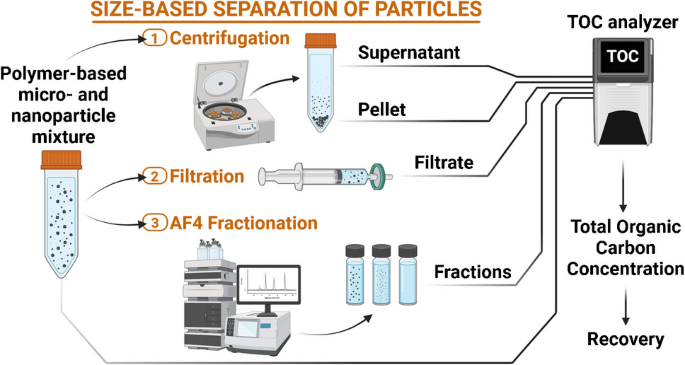
TOC stands for Total Organic Carbon. A TOC analyzer is an instrument that measures the concentration of organic carbon present in a water sample. In simple terms, it tells you how much organic contamination is dissolved in your water.
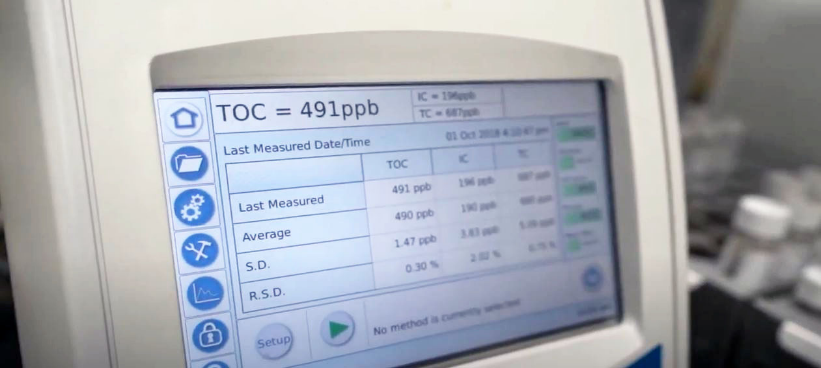
Now, water used in pharmaceutical manufacturing goes through several stages of purification. Purified Water (PW) and Water for Injection (WFI) are the two most important grades. Both are regulated strictly under global standards like USP, EP, and JP, as well as local regulatory frameworks. The acceptable TOC limit for pharmaceutical-grade water is typically 500 parts per billion (ppb) or less. Monitoring this consistently and accurately is where the online TOC analyzer comes into play.
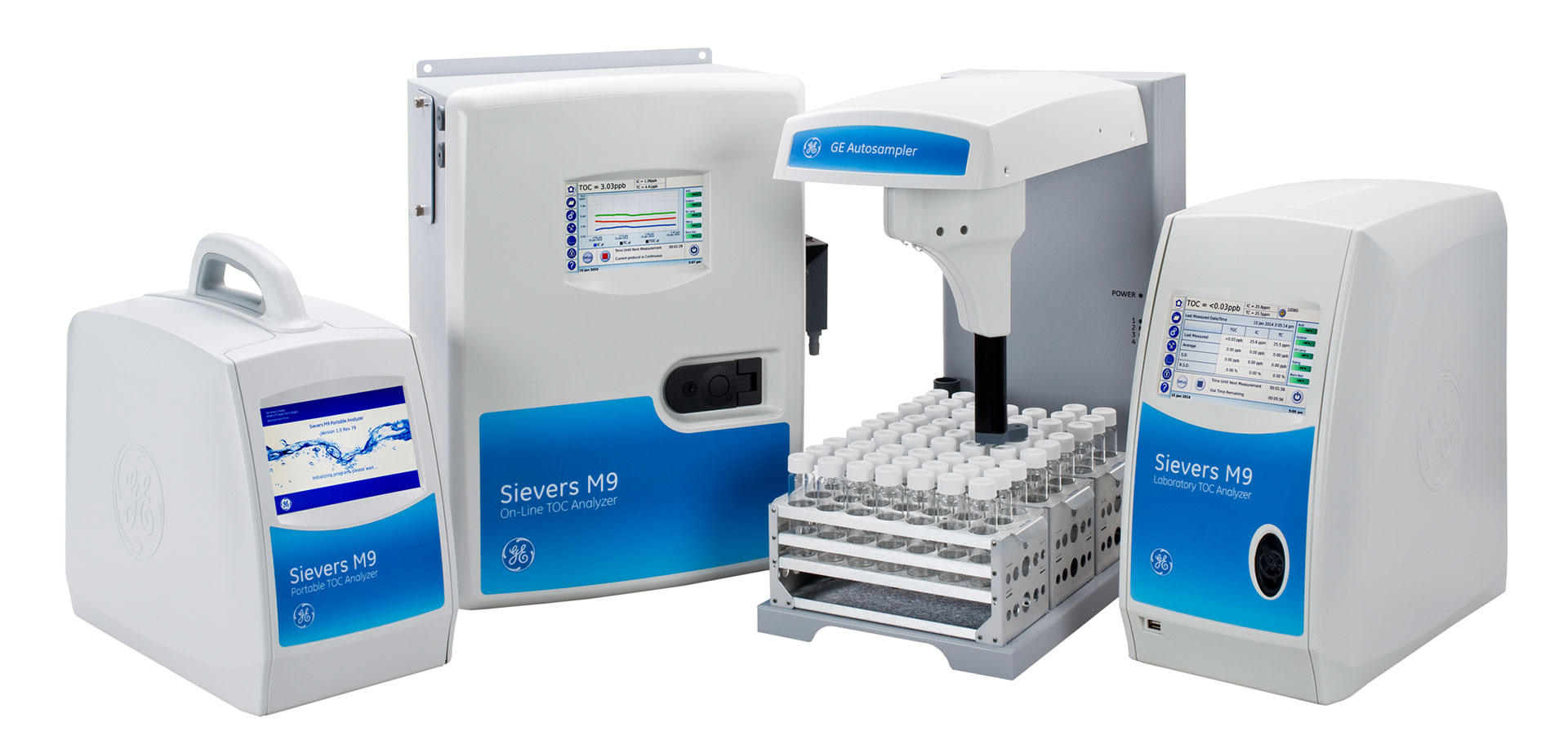
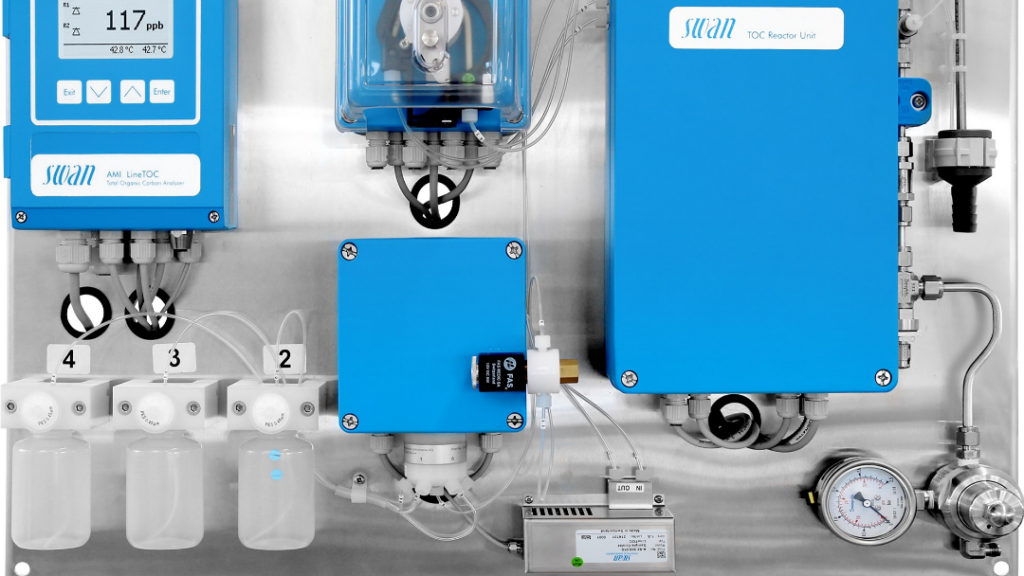
Unlike offline or laboratory-based analysis, where samples are collected, transported, and tested in batches, an online TOC monitoring system continuously measures TOC levels in real time, directly in the water stream. This gives you live data without delays, allowing immediate corrective action if contamination is detected.
How TOC Analyzer Works
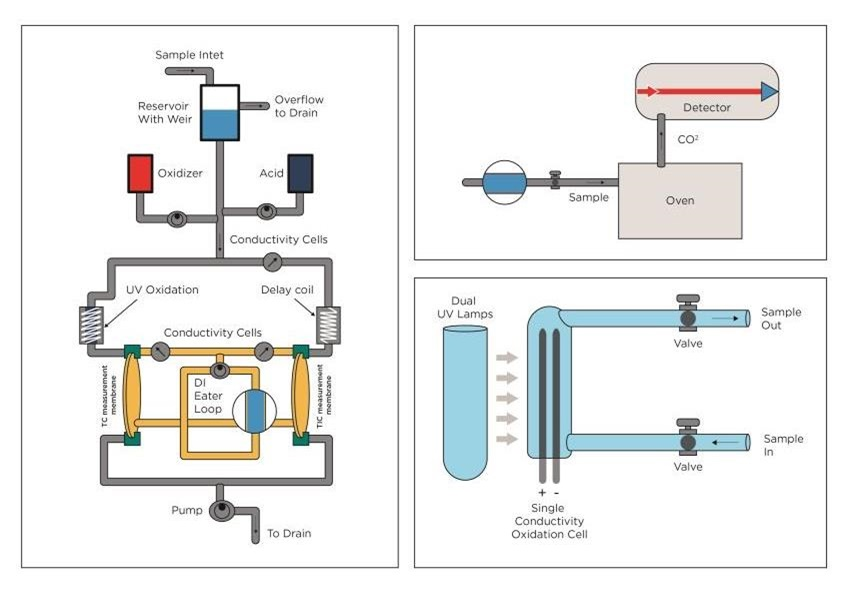
The basic principle involves oxidizing the organic compounds in the water sample and measuring the carbon dioxide produced. Here is a simple breakdown of the process:
- The water sample is introduced into the analyzer. The organic compounds in the sample are oxidized, either through UV light, high-temperature combustion, or chemical oxidation, depending on the instrument design. This oxidation converts the organic carbon into carbon dioxide gas. A detector, usually a non-dispersive infrared (NDIR) sensor, then measures the amount of CO2 generated. The instrument calculates the TOC value based on this measurement and displays it in real time.
- Some advanced analyzers also measure Total Inorganic Carbon (TIC) and Total Carbon (TC) separately and then calculate TOC as the difference. This matters in pharmaceutical water analysis because both organic and inorganic carbon forms can indicate contamination or system issues.
- Modern online TOC analyzers used in pharmaceutical settings are also equipped with conductivity measurement capabilities. This combined approach gives a more complete picture of water purity and supports compliance with multiple regulatory parameters simultaneously.
Importance of Process Water Analysis in Pharmaceuticals
- Process water in a pharmaceutical plant is used in washing equipment, formulating liquid medicines, preparing injections, cleaning manufacturing vessels, and even in steam generation. Any contamination that enters through the water stream can directly affect product quality.
- Organic compounds that find their way into processed water can come from biofilm growth within piping, leaching from gaskets or pipes, degradation of cleaning agents, and microbial activity. Inorganic contamination can come from minerals, metals, or chemical residues.
- Both types of contamination are dangerous. Organic contamination, even at low concentrations, can support microbial growth, interfere with drug formulation, and trigger endotoxin responses. Inorganic contamination can affect the chemical stability of medicines and interfere with analytical test results.
- The only way to reliably stay on top of this is through continuous, real-time monitoring using an online TOC analyzer. Waiting for offline test results is simply not practical when the water in question is moving through a continuous production loop.
The Role of Online TOC Monitoring in Pharmaceutical Water Systems
One of the strongest arguments for investing in an online TOC monitoring system is the concept of trend analysis. A single TOC reading tells you the current state of the water. But a continuous stream of data over days, weeks, and months tells you the behavior of your water system.
You can identify when TOC levels begin creeping upward before they breach acceptable limits. You can trace patterns that correlate with specific production activities, cleaning procedures, or seasonal changes in feed water quality. This kind of insight is invaluable for preventive maintenance, system optimization, and long-term regulatory compliance.
In pharmaceutical facilities operating under cGMP (current Good Manufacturing Practices), documentation and traceability are everything. An online TOC analyzer generates a continuous data log that is fully traceable and can be presented during regulatory inspections. This is a major advantage over manual or batch testing methods.
TOC Analyzer for Water Quality
The importance of a TOC analyzer in pharmaceutical water systems goes beyond just pharmaceuticals. Water quality monitoring is critical across food and beverage production, semiconductor manufacturing, power generation, and municipal water treatment. However, in the pharmaceutical sector, the stakes are uniquely high because the end product is something that goes directly into the human body.
The pharmaceutical sector has grown significantly over the past decade. As facilities scale up and regulatory scrutiny increases, the demand for reliable TOC analyzer suppliers has also grown sharply.
Pharmaceutical companies here are aligning with international standards, including those from the United States Pharmacopeia (USP), European Pharmacopoeia (EP), and the KSA Ministry of Health guidelines. All of these require rigorous water quality testing, and TOC is a core parameter in that testing regime.
Pharmaceutical Water Quality Standards
Pharmaceutical water quality standards are largely harmonized with international pharmacopeial requirements. Facilities producing sterile products must demonstrate that their Purified Water and WFI meet TOC limits consistently throughout the production process.
Regulatory audits by local health authorities and international bodies like the WHO or FDA (for export-oriented facilities) will often scrutinize water system documentation. An online TOC analyzer with data logging capability provides exactly the kind of evidence auditors look for.
Facilities that rely on manual or offline testing alone often find it difficult to demonstrate continuous compliance. The shift toward online monitoring is therefore not just a technical upgrade; it is a compliance strategy.
Choosing the Right Online TOC Analyzer
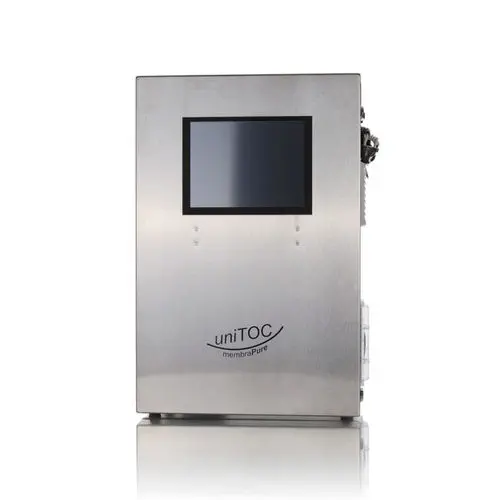
When selecting an instrument for a pharmaceutical water system, there are several factors to consider.
Measurement Range
For pharmaceutical applications, you need an analyzer that can accurately measure at low ppb levels, typically down to 0.5 ppb or lower. The oxidation method also matters. UV-persulfate oxidation is widely used in pharmaceutical applications because it is gentle enough for low-carbon matrices yet effective enough to fully oxidize organic compounds.
Ease Of Calibration And Validation
The instrument should support system suitability testing as required by USP Chapter 643, which is the standard specifically governing TOC testing in pharmaceutical water. Integration capability is another consideration. A good online TOC monitoring system should be able to connect with your building management system or SCADA platform, enabling centralized data collection and alarm management.
Consider The Support And Service Network
If you are purchasing a TOC analyzer, it is wise to work with established TOC analyzer suppliers who can provide calibration services, spare parts, and technical support locally.
Your Reliable TOC Analyzer Solutions in the KSA
At KSA Apex Instrument, we understand the critical role that water quality plays in pharmaceutical manufacturing. We supply and support a range of online TOC analyzers suited to pharmaceutical process water applications, from entry-level systems for smaller facilities to high-end continuous monitoring platforms for large-scale GMP-compliant operations.
Our team works closely with pharmaceutical companies, engineering contractors, and quality assurance professionals to recommend the right instrument for each application. We also provide after-sales support, calibration assistance, and guidance on regulatory documentation.
FAQs
1.What is a TOC analyzer, and why is it used in pharmaceuticals?
A TOC analyzer is an instrument that measures the total organic carbon content in water. In pharmaceuticals, it is used to ensure that process water, such as Purified Water and WFI, meets the purity standards required by pharmacopeial guidelines. Since organic contamination can compromise drug safety and efficacy, a TOC analyzer for water quality monitoring is an essential part of pharmaceutical water testing.
2.How does an online TOC analyzer differ from a laboratory TOC analyzer?
An online TOC analyzer is installed directly in the water system and provides continuous, real-time measurements without requiring manual sample collection. A laboratory analyzer, on the other hand, requires samples to be taken to a lab for batch analysis. Online TOC monitoring systems are preferred in pharmaceutical water systems because they provide immediate data and support continuous compliance monitoring.
3.What is the acceptable TOC limit for pharmaceutical water?
According to USP Chapter 643, the TOC limit for Purified Water and Water for Injection is 500 parts per billion (ppb). An online TOC analyzer is used to continuously verify that water remains within this limit throughout production.
4.How does a TOC analyzer work technically?
The TOC analyzer works by oxidizing organic compounds in the water sample and measuring the resulting carbon dioxide using an infrared detector. This measurement is used to calculate the TOC value. Some instruments also measure inorganic carbon separately to provide a complete carbon profile of the water.
5.Why is an online TOC monitoring system better than periodic testing?
Periodic testing only gives you a snapshot of water quality at a specific moment. An online TOC monitoring system provides a continuous stream of data, allowing you to detect trends, identify contamination events early, and respond before the water quality deteriorates below acceptable levels. This is especially important in pharmaceutical water testing, where regulatory compliance must be demonstrated continuously.
6.What are the main sources of organic contamination in pharmaceutical process water?
Organic contamination can come from biofilm growth in piping, leaching from elastomers or plastic components, degradation of cleaning agents, and microbial activity. An online TOC analyzer helps detect these contamination events as they occur.
7.Is TOC analysis mandatory for pharmaceutical water systems?
Yes, TOC analysis is a mandatory requirement under USP Chapter 643 for Purified Water and WFI systems. Pharmaceutical water quality standards align with these international pharmacopeial requirements, making TOC monitoring a regulatory necessity.
8.Can a TOC analyzer measure both organic and inorganic carbon?
Yes, advanced TOC analyzers can measure Total Inorganic Carbon (TIC) and Total Carbon (TC) and calculate Total Organic Carbon (TOC) as the difference. This capability is useful in pharmaceutical water testing because both organic and inorganic contamination can affect water quality.
9.Where can I find reliable TOC analyzer suppliers?
Apex Instrument is one of the established TOC analyzer suppliers, offering a range of online TOC analyzers for pharmaceutical and industrial water quality applications.
10.What industries besides pharmaceuticals use TOC analyzers?
TOC analyzers are used in semiconductor manufacturing, food and beverage production, power generation, chemical processing, and municipal water treatment. However, the pharmaceutical industry has some of the most stringent TOC requirements due to the direct impact of water quality on drug safety.
11.What is the role of a TOC analyzer in pharmaceutical water systems specifically?
In pharmaceutical water systems, the TOC analyzer serves as a continuous quality sentinel. It monitors the water used in formulation, washing, sterilization, and other critical processes to ensure that organic contamination levels remain within acceptable limits at all times.
12.How often should a pharmaceutical TOC analyzer be calibrated?
Calibration frequency depends on the manufacturer’s recommendations and regulatory requirements, but most pharmaceutical facilities calibrate their TOC analyzers at least quarterly. System suitability testing, as outlined in USP Chapter 643, should also be performed regularly to confirm that the instrument is functioning correctly.
13.What should I look for when buying a TOC analyzer for pharmaceutical use?
Look for an instrument with low detection limits (ideally down to 0.5 ppb or lower), USP 643 compliance, reliable oxidation technology, easy validation procedures, data logging capabilities, and local support from trusted TOC analyzer suppliers.
14.How does an online TOC analyzer support GMP compliance?
An online TOC monitoring system generates continuous, time-stamped data that documents water quality throughout production. This data log is an important part of GMP documentation and can be presented during regulatory audits to demonstrate consistent compliance.
15.What is the difference between Purified Water and Water for Injection in terms of TOC?
Both Purified Water and Water for Injection have the same TOC limit of 500 ppb under USP guidelines. However, WFI has additional requirements related to microbial content and endotoxin levels. An online TOC analyzer is used for both grades to ensure continuous compliance with pharmaceutical water quality standards.
16.Can a TOC analyzer be integrated with a SCADA or building management system?
Yes, most modern online TOC analyzers come with standard communication interfaces such as 4-20 mA, Modbus, or Ethernet, allowing integration with SCADA systems, data historians, or building management platforms. This integration supports centralized monitoring and automated alarm management.
17.What is the typical lifespan of an online TOC analyzer in a pharmaceutical setting?
With proper maintenance and calibration, a quality online TOC analyzer can last ten years or more. However, regular servicing, replacement of consumables, and periodic recalibration are important to maintain measurement accuracy and regulatory compliance over the instrument’s lifetime.
18.Are there specific TOC analyzer models recommended for pharmaceutical water testing?
The best model depends on your specific water system design, flow rates, and compliance requirements. Consulting with experienced TOC analyzer suppliers ensures you get a model that meets your specific needs and is supported locally for ongoing service and maintenance.
19 How does biofilm affect TOC readings in a pharmaceutical water system?
Biofilm formation inside water distribution piping can release organic carbon into the water, causing TOC levels to rise. An online TOC analyzer will detect this increase in real time, alerting the facility to a potential biofilm issue before it becomes a serious contamination problem.
20.What makes Apex Instrument a good choice for TOC analyzer solutions?
Apex Instrument combines product expertise with local support. As experienced TOC analyzer suppliers, we offer a range of instruments suited to pharmaceutical water quality applications, backed by technical guidance, calibration support, and after-sales service. Our goal is to help pharmaceutical facilities achieve and maintain reliable compliance with pharmaceutical water quality standards.
Contact our experts for personalized equipment guidance, training, and SOP support.
Contact:
Email: sales@apex-instrument.com
Mobile/WhatsApp: +971526191767