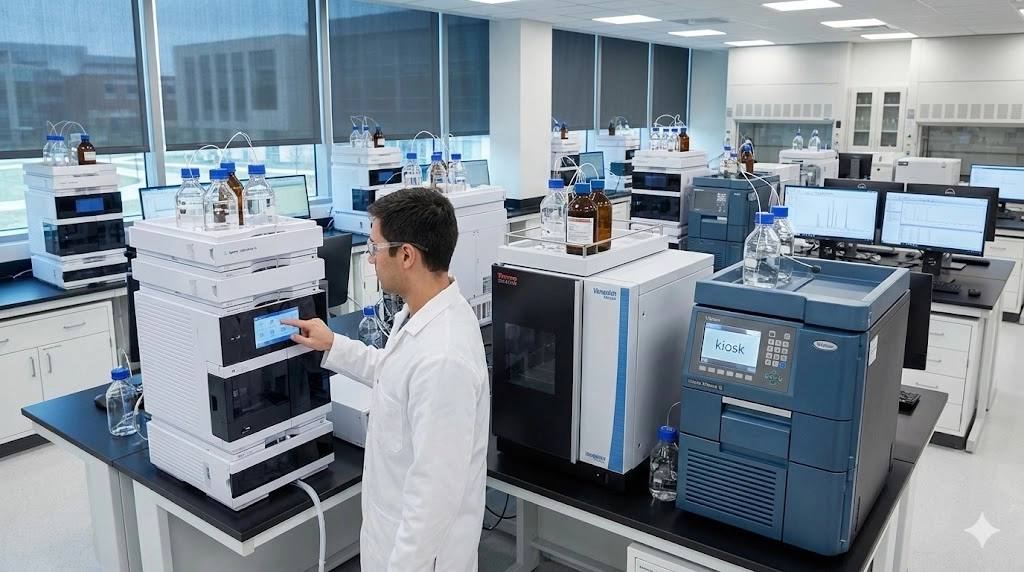
Nanoparticle characterization is a fundamental process in nanotechnology research, enabling scientists to accurately evaluate the properties, performance, and stability of nanoparticles.
Reliable characterization data is essential for advancing research from laboratory studies to practical applications across various industries. Techniques such as particle size and zeta potential analysis provide critical insights into particle behavior, dispersion, and surface charge.
As the demand for nanoparticle characterization in universities continues to increase, researchers require advanced analytical instruments for research to ensure accuracy, reproducibility, and compliance with scientific standards.
In this blog, we will explore the importance of nanoparticle characterization, methods, and research benefits.
What is Nanoparticle Characterization?
So, what is nanoparticle characterization, exactly?
Nanoparticle characterization is the process of studying the key properties of nanoparticles, such as particle size, surface charge, shape, and stability. These measurements help researchers understand how nanoparticles behave and perform in different applications, including healthcare, materials science, and environmental research.
In universities and research institutes, nanoparticle characterization is essential for producing accurate and reliable research results. It provides the data needed to validate findings, improve product development, and support scientific innovation. With the growth of nanotechnology research, advanced characterization techniques and analytical instruments are becoming increasingly important for modern research laboratories.
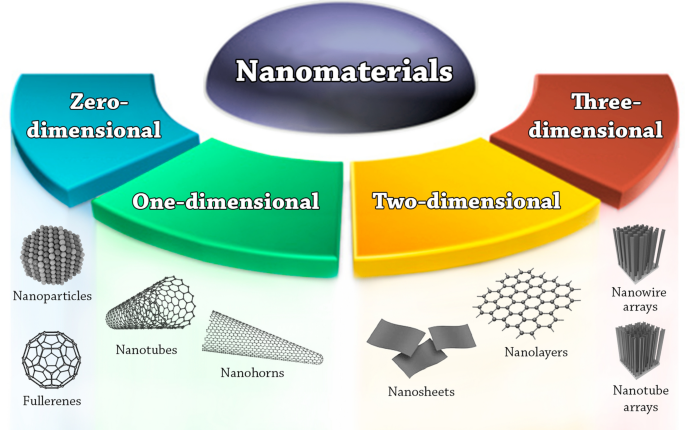
How Nanoparticle Characterization Supports Academic Research
In universities and research institutes, methods of nanoparticle characterization and best techniques for nanoparticle analysis play a key role in understanding, validating, and applying nanomaterials effectively:
- Nanoparticles behave differently from bulk materials, making detailed study necessary to understand their real-world properties and applications.
- Characterization data confirms research findings by providing evidence such as particle size, zeta potential, and structural information required in scientific publications.
- Stability assessment is crucial, as nanoparticles that aggregate or degrade are unsuitable; particle size and zeta potential analysis help determine their performance in solutions.
- Reliable characterization supports the connection between academic research and industry use by building trust and improving the commercialization of innovations.
- In Saudi Arabia, growing investment in research under Vision 2030 has increased demand for advanced analytical instruments and strong laboratory support for nanotechnology studies.
Overall, strong characterization practices ensure accurate research outcomes and support the future growth of nanoscience applications.
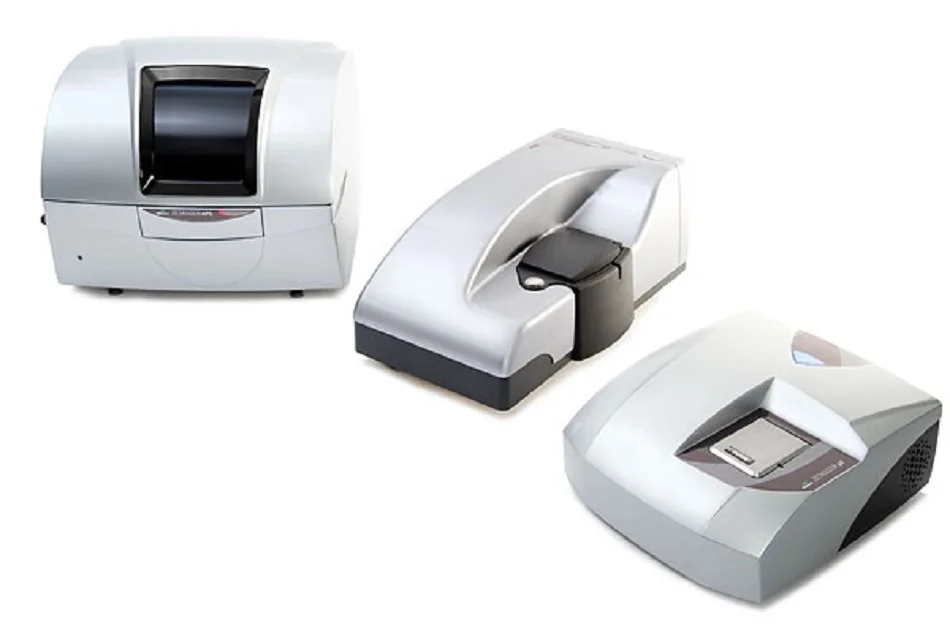
Methods of Nanoparticle Characterization
There are several methods of nanoparticle characterization used in research labs and are essential for accurate and reliable nanotechnology research.
Dynamic Light Scattering (DLS)
DLS is one of the most common methods used for measuring particle size in liquid samples. It works by analyzing light scattering from particles in motion. This is one of the most preferred and best techniques for nanoparticle analysis. It is widely used in labs that need to know how to measure nanoparticle size accurately within a broad range of nano- and micro-scale particles.
Zeta Potential Analysis
This method measures surface charge and helps predict nanoparticle stability in suspension. It is important in pharmaceuticals, materials science, and food research because it shows whether particles will remain stable or aggregate over time.
Electron Microscopy (SEM and AFM)
These techniques provide high-resolution images of nanoparticles, showing exact size, shape, and surface structure. Unlike DLS, they give direct visual data of individual particles.
Transmission Electron Microscopy (TEM)
TEM is used for very detailed imaging and is common in academic research for studying the internal structure and morphology of nanoparticles.
X-Ray Diffraction (XRD) and Surface Area Analysis
XRD helps identify crystalline structure, while surface area analysis measures porosity and total surface area, which is important in catalysis and material research.
In Saudi Arabia’s growing research sector, demand for a reliable nanoparticle analyzer supplier in Saudi Arabia and a trusted laboratory analytical instruments supplier in KSA is increasing.
How Research Moves From Academia to Commercialization
Nanoparticle research in universities plays a major role in driving real-world innovation. When researchers in cities like Riyadh or Jeddah study new nanoparticles for drug delivery, water treatment, or solar energy, their findings are not limited to academic papers. Instead, industries such as pharmaceuticals, biotech, and advanced materials use this data to develop practical products and solutions.
For this process to be effective, accurate and reliable testing are essential. Techniques like dynamic light scattering technology help researchers measure particle behavior, while a particle size analyzer ensures precise size distribution results. High-quality data from a well-equipped material testing laboratory is what makes research reproducible and trusted by industry.
In Saudi Arabia, the demand for advanced research tools is growing rapidly. Universities and research centers depend on a reliable laboratory equipment distributor in the KSA to provide properly calibrated instruments and strong after-sales support. This ensures consistent research quality and strengthens the country’s position in global nanotechnology innovation.
Best Techniques for Nanoparticle Analysis and Their Applications
Choosing the right methods for nanoparticle study is important for research labs in KSA. A well-equipped material testing laboratory helps scientists select accurate tools for reliable results and better research outcomes.
- Particle Size Analysis: Using Dynamic Light Scattering: Dynamic light scattering technology is widely used for particle size analysis because it quickly measures particle size in liquid samples. A modern particle size analyzer is an essential instrument in many research setups and is often supplied by a trusted research laboratory equipment supplier in Saudi Arabia.
- Role of Zeta Potential: The role of zeta potential analyzers in nanotechnology research is to measure surface charge and predict how stable nanoparticles are in a solution. This is very important for product development in pharmaceuticals, cosmetics, and advanced materials.
- Advanced Imaging and Structural Analysis: Techniques like SEM and TEM provide clear images of particle size, shape, and structure. AFM is used to study surface texture, while XRD helps identify crystal structure. BET surface area analysis is useful for studying porosity and adsorption behavior in materials research.
- Importance of Combined Systems: For most university and early-stage research labs, a combined system for particle size analysis and zeta potential measurement is the best choice. It covers essential parameters needed for nanotechnology research and academic publications.
High-quality instruments are usually sourced through a trusted laboratory equipment distributor in the KSA, ensuring proper calibration, technical support, and long-term performance for advanced research laboratories.
How Particle Size Analysis Works in Scientific Studies
Particle size analysis gives a complete understanding of how particles are distributed in a sample. A modern particle size analyzer helps researchers measure key details like mean particle size, uniformity of particles, and how the sizes are spread across the sample.
This analysis is widely used in material testing laboratories to compare batches, check consistency, and study changes in material properties. It is also an important part of nanotechnology research, as these results are commonly required in scientific studies and publications.
Conclusion
Nanoparticle characterization is a key part of nanotechnology research. It helps researchers clearly understand their materials and confirm. For universities and research institutes in KSA, investing in reliable particle size analysis and zeta potential testing is very important for strong research outcomes. Choosing a trusted laboratory analytical instruments supplier in KSA ensures access to the right tools and long-term support. If a material testing laboratory needs advanced solutions like a particle size analyzer or zeta potential system, connecting with experienced suppliers like Apex Instrument can help in selecting the right equipment for accurate and efficient research work.
FAQs
1. What is nanoparticle characterization?
Nanoparticle characterization is the process of measuring properties like size, surface charge, and morphology of nanoparticles to understand their behavior and suitability for different applications.
2. Why is nanoparticle characterization important in universities?
Nanoparticle characterization in universities helps researchers validate findings, publish credible data, and build the foundation for commercial applications.
3. What is particle size analysis?
Particle size analysis is a measurement process that determines the size distribution of particles in a sample, giving data such as mean size, polydispersity, and D10, D50, and D90 values.
4. What is zeta potential and why does it matter?
Zeta potential is the electric charge on nanoparticle surfaces in a liquid. It helps show how stable the particles are and whether they will stay separate or clump together, which is important in pharmaceutical and material research.
5. What is dynamic light scattering technology?
Dynamic light scattering technology measures how light scatters from moving particles in a liquid to calculate their size. It is one of the most widely used methods for nanoparticle size measurement.
6. How to measure nanoparticle size?
Nanoparticle size can be measured using techniques such as dynamic light scattering, electron microscopy, or nanoparticle tracking analysis, depending on the required level of detail and sample type.
7. What are the main methods of nanoparticle characterization?
The main methods of nanoparticle characterization include DLS for size, zeta potential analysis for surface charge, SEM and TEM for morphology, XRD for crystal structure, and BET for surface area.
8. What does a particle size analyzer do?
A particle size analyzer measures the size distribution of particles in a sample, often using light scattering. It gives researchers key data needed for quality control and formulation development.
9. What is the role of zeta potential analyzers in nanotechnology research?
Zeta potential analyzers help researchers determine how stable nanoparticle suspensions are, which is essential for drug delivery, cosmetics, coatings, and material testing laboratory work.
10. What is particle size and zeta potential analysis used for?
Particle size and zeta potential analysis are used together to evaluate both the size and stability of nanoparticles.
11. Where can I find a nanoparticle analyzer supplier in Saudi Arabia?
Apex Instrument is a trusted nanoparticle analyzer supplier in Saudi Arabia.
12. What are the best techniques for nanoparticle analysis in KSA?
The best techniques for nanoparticle analysis in KSA include DLS-based particle size analysis, zeta potential measurement, and SEM imaging.
13. What is a material testing laboratory?
A material testing laboratory is a facility equipped to test and analyze the physical and chemical properties of materials, including nanoparticles, using instruments like particle size analyzers and spectrophotometers.
14. Who is a reliable laboratory analytical instruments supplier in the KSA?
Apex Instrument is a well-established laboratory analytical instruments supplier in the KSA, supporting universities, research institutes, and industries with quality equipment and after-sales service.
15. What does a laboratory equipment distributor in the KSA offer?
A laboratory equipment distributor in the KSA, like Apex Instrument, provides sourcing, supply, installation, calibration, and support for a wide range of lab instruments across Saudi Arabia.
16. What is a research laboratory equipment supplier in Saudi Arabia?
A research laboratory equipment supplier in Saudi Arabia is a company that sources and supplies specialized instruments for academic and industrial research labs, including analytical and characterization tools.
17. Can DLS measure nanoparticle size accurately?
Yes, dynamic light scattering technology gives accurate hydrodynamic size measurements for particles in the 1 nm to several micron range, making it ideal for most nanoparticle characterization needs.
18. What is PDI in particle size analysis?
PDI, or Polydispersity Index, shows how evenly particle sizes are distributed in a sample. A low PDI value means the particles are more uniform and consistent.
19. How does zeta potential affect nanoparticle stability?
Nanoparticles with a high absolute zeta potential, usually above ±30 mV, are considered stable because electrostatic repulsion helps prevent aggregation. Lower values may suggest that the particles can clump together.
20. What industries use nanoparticle characterization?
Nanoparticle characterization is used in pharmaceuticals, food science, cosmetics, environmental science, materials research, and many other industries where particle properties determine product performance.
21. Why is a particle size analyzer essential for a research lab?
A particle size analyzer gives researchers immediate and repeatable data on their samples without needing to outsource testing, which helps speed up research cycles in universities and research institutes.
22. How does nanoparticle characterization support commercialization?
Detailed nanoparticle characterization data builds confidence in research findings, helping industries adopt academic discoveries into products more quickly and with fewer risks.
23. What brands does Apex Instrument work with for analytical instruments?
Apex Instrument partners with world-class brands like JASCO, CORDOUAN Technologies, Oxford Instruments, and others to supply high-quality analytical instruments for research in KSA and across the MENA region.
24. What is SEM used for in nanoparticle characterization?
SEM, or Scanning Electron Microscopy, provides detailed images of nanoparticle size, shape, and surface morphology, which is important for visual confirmation in research publications.
25. Is zeta potential relevant for drug delivery research?
Yes, zeta potential is extremely important in drug delivery research. It determines how drug-loaded nanoparticles interact with biological environments and whether they will remain stable before reaching their target.
26. How can research labs in KSA access nanoparticle characterization equipment?
Research labs in the KSA can access nanoparticle characterization equipment through Apex Instrument, a trusted laboratory equipment distributor in the KSA with regional support and a wide range of analytical instruments.
27. What is surface area analysis in nanoparticle characterization?
Surface area analysis, usually done using the BET method, measures the total surface area nanoparticles have per unit weight. This is important for applications like catalysis, adsorption, and environmental studies.
28. How long does a particle size analysis take?
Particle size analysis using dynamic light scattering technology usually takes just a few minutes per sample, making it one of the fastest and most practical methods for routine laboratory use.
29. Can the same instrument measure both particle size and zeta potential?
Yes, many modern instruments combine both particle size and zeta potential analysis in a single device, making them cost-effective and convenient for busy laboratories.
30. How do I choose the right nanoparticle characterization instrument for my lab?
Choosing the right instrument depends on your sample types, required measurements, and budget. Apex Instrument’s team can help you select the right analytical instruments for research.
Contact:
Get advanced nanoparticle characterization instruments, and contact us today for expert guidance and lab support.
Mobile/WhatsApp: +971526191767
Email: sales@apex-instrument.com